


Hot Water System Lifespan: Realistic Expectations and Maintenance Checklist for ACT Homeowners
A reliable hot water system is easy to take for granted until the first tepid shower on a frosty Canberra morning reminds you just how essential it is. While a quality unit should serve you well for many years, no system lasts forever. Local factors such as Canberra’s hard-water mineral content, frequent winter freeze–thaw cycles and the way the unit is installed all play a role in how long it will keep performing.
This guide explains the typical lifespan you can expect from the main types of hot water units, the warning signs of age-related failure, and the maintenance steps that make the biggest difference. If you are planning a replacement and want a seamless changeover, professional support for hot water system installation will help you avoid the common pitfalls that shorten a new unit’s life before it has even warmed its first bath.
1. How Long Do Hot Water Systems Usually Last?
A hot water unit’s working life depends on its energy source, tank or tankless configuration, build quality and local operating conditions. Canberra’s relatively hard water can encourage scale buildup, and sub-zero nights can fatigue components faster than in milder climates. The table below summarises broad lifespan expectations and what usually ends a unit’s service life.
| Hot Water Type | Average Lifespan in ACT Conditions | Common End-of-Life Triggers | Key Care Tips |
| Gas storage tank | 8–12 years | Corroded tank, failed gas valve, leaking relief valve | Annual pressure-relief valve test, flush sediment every 6–12 months |
| Gas continuous flow (instant) | 12–15 years | Heat-exchanger corrosion, sensor failure | Descale heat exchanger every 2–3 years, keep outdoor units clear of debris |
| Electric storage tank | 10–15 years | Element burnout, anode rod depletion, tank rust | Replace sacrificial anode every 4–5 years, flush sediment annually |
| Heat-pump | 10–12 years | Compressor fatigue, refrigerant leaks | Clean coils yearly, ensure adequate airflow |
| Solar with gas boost | Panels 20+ years, tank 10–15 years | Tank corrosion, pump failure, collector stagnation | Inspect panels yearly, service pump, test antifreeze mix |
Expectations are guides rather than guarantees. Poor installation, missed servicing or unusually harsh water conditions can lop years off the timelines, while diligent maintenance can push them out.
2. Why Canberra’s Water Quality and Climate Matter
Canberra’s mains water is classed as moderately hard, meaning it carries dissolved minerals like calcium and magnesium. When water is heated, these minerals precipitate and form scale on heating elements, inside tanks and along pipework. Scale acts as insulation, forcing the system to run hotter and longer to produce the same water temperature, which accelerates wear.
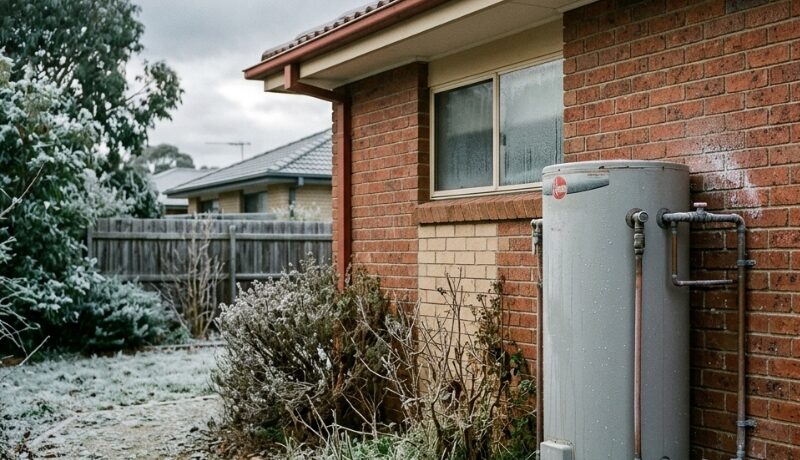
Winter lows often dip below zero, and if a system sits in an uninsulated area — for example, on an external wall or under a deck — repeated freezing and thawing can strain joints and crack sacrificial anodes faster than the national average. Positioning a new unit in a sheltered spot, adding lagging to pipes, or selecting a model with built-in frost protection can all mitigate Canberra-specific stresses.
3. Early Signs Your System Is Nearing the End
Sudden failure rarely happens without clues. Catching problems early can save you from an emergency replacement during a cold snap.
3.1 Temperature and Pressure Fluctuations
Water runs hot one minute then lukewarm the next. For storage units, inconsistent temperature often points to failing thermostats, compromised dip tubes or heavy sediment blocking heat transfer.
3.2 Rumbling, Whistling or Popping Noises
Sediment sitting on the tank base or inside a gas instant system’s heat exchanger traps steam bubbles that pop as they escape. The sound is often louder in Canberra suburbs with harder water mains.
3.3 Rust-Tinged or Cloudy Water
A corroded sacrificial anode or tank wall can release rust particles into your hot tap flow. If changing the anode doesn’t clear the colour, internal tank corrosion may be advanced.
3.4 Moisture, Drips or Pooling Around the Unit
A few drops from the pressure-relief valve after heating is normal, but constant dampness or wet patches at the tank base suggest a leak that will only get worse.
3.5 Rising Energy or Gas Bills
As heating elements or burners work harder to overcome scale, efficiency slides. An unexplained bump in your utility bills can be an early warning that components are wearing out.
4. Maintenance Tasks That Extend Lifespan
Taking proactive steps each season can add years to a unit that would otherwise fail early.
4.1 Flush Out Sediment
Every six to twelve months, drain a bucket-load of water from the tank via the drain valve until the water runs clear. This simple habit reduces scale buildup and noise.
4.2 Test and Replace the Sacrificial Anode
Inside steel tanks sits a magnesium or aluminium anode designed to corrode instead of the tank wall. Canberra’s mineral-rich supply can exhaust an anode in four to five years. Replacing it costs far less than a new tank.
4.3 Check the Temperature–Pressure Relief Valve
Lift the valve lever briefly. A healthy valve should expel hot water then reseat without drips. If it sticks or leaks continuously, have it replaced.
4.4 Descale Continuous-Flow Heat Exchangers
Instant gas units benefit from professional descaling every two to three years. The process circulates a mild acid solution through the exchanger to dissolve mineral deposits.
4.5 Insulate Exposed Pipework
Lagging adds a protective sleeve that prevents heat loss in winter and guards against freeze stress. Focus on the first two metres of the outgoing hot pipe and any external lines.
4.6 Annual Appliance Servicing
A qualified technician will test gas pressures, inspect wiring, clean filters and verify safety controls. Regular servicing isn’t just for space heaters. This principle applies to hot water units — the same logic behind routine checks covered in how often you should service a gas heater in Canberra.
5. DIY vs Professional Tasks: Where to Draw the Line
Some upkeep is safe for confident homeowners, but others require a licensed tradesperson for compliance and safety.
| Task | Usually Safe DIY | Best Left to Professionals | Reason |
| Replacing the sacrificial anode | Yes | – | Low-risk with clear manufacturer steps |
| Testing the pressure-relief valve | Experienced DIY only | Yes if unsure | Needs correct torque, thread seal and relief port handling |
| Descaling the heat exchanger | Yes | – | Simple lever lift, minimal hazard |
| Descaling heat exchanger | – | Yes | Must be measured with a manometer, requires licence |
| Adjusting gas burner pressure | – | Yes | Turning off power or gas, attaching a hose and draining a tank |
If ever in doubt, ACT plumbing and gas regulations stipulate that any work involving gas fittings or electrical components must be done by a licensed professional.
6. Questions That Help You Decide Between Repair and Replacement
- How old is the unit compared with the average lifespan in the earlier table?
- Has it required multiple repairs in the past two years?
- Is rust visible on the tank seam or around pipe fittings?
- Are running costs climbing even after regular maintenance?
- Do local rebates make upgrading to a higher-efficiency model financially attractive?
When three or more of these points suggest trouble, planning a replacement is often more economical than chasing ongoing fixes.
7. Canberra Rebates and Efficiency Incentives
The ACT Government encourages low-emission water heating through the Sustainable Household Scheme and other rebate programs. Current offers typically cover heat-pump and solar-boosted systems that meet specific efficiency thresholds. Eligibility criteria and rebate amounts can change, so always cross-check the latest details on the hot water systems guide before signing a contract.
8. Common Mistakes That Shorten Hot Water System Life
• Installing the unit where rainwater pools around its base
• Forgetting to reconnect the cold-water inlet filter screen after cleaning
• Setting the thermostat higher than 60 °C, which accelerates scale buildup
• Ignoring small leaks under the assumption they will seal themselves
• Skipping professional servicing because “it’s still working fine”
Avoiding these traps is often simpler than fixing the damage they cause.
9. Five-Minute Seasonal Inspection Checklist
Tick through this list at the change of every season or ahead of a long holiday.
- Check around the tank or unit for moisture or rust streaks
- Listen for new rumbling or hissing sounds while the unit is heating
- Feel if the outgoing hot pipe is too hot to touch (lag if needed)
- Lift the pressure-relief valve lever to ensure it moves freely
- Note the age of the system and schedule professional servicing if due
Printing the list and keeping it near the switchboard makes a quick visual check part of your regular household routine.
Frequently Asked Questions
1. How can I tell how old my hot water system is?
Most tanks have a manufacturer’s date stamped on the compliance badge or listed within the serial number. For continuous-flow models, the serial code often embeds the year and month. If you cannot decode it, the manufacturer’s website or a licensed plumber can confirm the age.
2. Is it worth repairing a ten-year-old gas storage heater?
If the issue is a simple valve replacement and the tank shows no corrosion, a low-cost repair may buy extra time. However, when a decade-old unit needs a new burner or exhibits rust, replacement is usually more cost-effective and avoids sudden failure.
3. How often should I flush an electric storage tank in Canberra?
Because of moderate water hardness, flushing every six to twelve months is recommended. Homes drawing from private bores or noticing heavier sediment may benefit from flushing each quarter.
4. Do heat-pump water heaters cope with Canberra’s winter nights?
Modern heat-pump models include defrost cycles and can operate in sub-zero temperatures, though efficiency dips slightly. Installing the unit in a sheltered location and following the manufacturer’s clearance guidelines ensures reliable cold-weather performance.
5. Will a water softener extend my hot water system’s life?
Yes. By reducing mineral content, a softener can slow scale formation on elements and inside tanks, improving efficiency and adding several years of service life. Consider whole-of-house softening if you experience visible scale on taps and shower screens.
Final Thoughts
Understanding realistic lifespans helps Canberra homeowners budget for replacements before the winter rush, while consistent maintenance keeps today’s system running safely for as long as possible. When signs point toward retirement, arranging expert advice and a compliant installation will set the next unit up for a longer, more efficient life.